




Helping to plan for, find and keep the workforce needed to deliver health for all.
AHP is a social profit organisation that works with the South African government and civil society organisations to find solutions to Human Resources for Health challenges.
About AHP
Our Board
AHP's board is responsible for:
- Approving the project strategic direction
- Reviewing the projects purpose, vision and values on an annual basis
- Reviewing project outcomes on a quarterly basis against progress indicators
- Reviewing results annually
- Reporting back to their respective principals
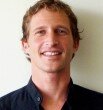
Saul Kornik
Executive Director and CEO of AHP
Saul was involved in setting up the Rural Health Initiative from its infancy in 2006. He was involved in negotiating and leading the merger to form AHP in 2007, and has led the organisation since then.
Saul has a number of years of corporate experience with Deloitte, Goldman Sachs and Lloyds TSB in South Africa, London and Bermuda. He is a qualified Chartered Accountant, Chartered Financial Analyst and has completed his Masters degree in intelligent pattern recognition techniques as applied to the prediction of corporate failure. He has also spent some time lecturing in these topics. He was awarded the Archbishop Tutu African Leadership Fellowship in 2008 and was selected as one of South Africa’s top 200 young South Africans by the Mail & Guardian in 2011. In 2013, he was selected as a Yale World Fellow.
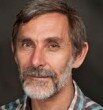
Prof. Jannie Hugo
Non-Executive Director and Head of Department of Family Medicine at the University of Pretoria
Prof. Hugo was involved in setting up the Rural Health Initiative from its infancy. He has been involved at a strategic level in the organisation ever since then.
Prof. Hugo is a Family Physician, heading up the University of Pretoria’s Department of Family Medicine. Before that, he worked at the Medical University of Southern Africa (MEDUNSA) for 17 years. He has served on the executive and several committees of the Health Professions Council of South Africa, on the board of Enablemed, and is also a founder-researcher of the Madibeng Centre for Research in Brits. His interest is in education and management of primary care services, district and rural health, and the development of district campuses in urban and rural areas. He has published extensively. Prof. Hugo was integral to initiating the development of a mid-level medical worker programme for South Africa.

Dr Penny Tlhabi
Chair and Non-Executive Director
Dr Tlhabi is a Director of Discovery Health, heading up Human Resources as well as Enterprise Development and Corporate Social Responsibility. She also serves on the Executive Committee of Discovery Holdings. Between 2002 and 2005, Dr Tlhabi was employed as the CEO of the Board of Healthcare Providers (BHF).
Between 1996 and 2000 she was employed as the CEO of Transmed Administrators. The main highlight of her tenure at Transmed was restructuring the business from a loss making entity which enabled it to be privatised in 2000. Dr Tlhabi serves as a Director of Witkoppen Clinic and has done so for the past three years.
In 1996 Dr Tlhabi completed the Management Advance Programme (MAP) through Wits Business School and in 2005 she went on to complete a Diploma in Health Management at the University of California. In 2011 she attended a Driving Performance through Talent Management Programme at the Harvard Business School and in 2012 she attended an Advanced Human Resource Executive Programme at the University of Michigan. She was elected as Chairperson in October 2014.
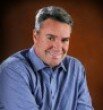
Dr Gustaaf Wolvaardt
Non-Executive Director and Managing Director of the Foundation for Professional Development
Dr Wolvaardt was involved in setting up The Placement Project. He has been involved at a strategic level in the organisation ever since then.
Dr Wolvaardt is the founder and MD of South Africa’s largest private university and one of the country’s largest recipients of PEPFAR funds, the Foundation for Professional Development. He is a qualified Internal Medicine Specialist and served as South Africa’s first health attaché at the South African permanent mission in Geneva. In this position he represented South Africa at the WHO, UNAIDS, UNESCO and other United Nations organisations. During this period he was elected as the Interim Chairman of the UNAIDS governing board for its third session (1995) and served as Chairman of the African health liaison committee in Geneva between 1995 and 1996. He founded FPD, under the South African Medical Association, on his return to South Africa. Dr Wolvaardt serves on the board of directors of the South African Institute for Health Care Managers, Dira Sengwe Conferences, Right to Care and Aids Accountability International.

Prelisha Singh
Non-Executive Director and Senior Associate at Webber Wentzel
Prelisha Singh is a Senior Associate at one of South Africa’s premier law firms, Webber Wentzel. She practises public law, and regularly advises on public law in the health environment. In 2009, Prelisha spent a year clerking at the Constitutional Court to Justice van der Westhuizen.
In 2010, she was also awarded a scholarship by the Commonwealth Scholarship Commission to read for a Bachelor of Civil Law (a Masters level qualification) at the University of Oxford, specialising in public law and socio-economic human rights, specifically the rights to health and education. Prelisha is also a Committee Member and Mentor at the Alexandra Education Committee Mentorship Programme, a bursary scheme for high school pupils.
